
By: Brock Anderson MS, CPE, LSSBB, CEPS, CSCS | Founder and Principal Ergonomist
Industrial ergonomics programs frequently adopt either pre-shift stretching routines or training in “safe lifting” as visible components intended to reduce work-related musculoskeletal disorders (WRMSDs). Both approaches are administrative controls that depend on worker participation and decision-making under production constraints and therefore should be implemented after higher-order risk controls (elimination, substitution, and engineering controls) have been applied. Evidence from sports medicine and occupational health indicates that isolated static stretching confers limited protection against injury and may be misapplied when transferred from athletic and clinical contexts into industrial settings, particularly when performed on cold tissues without a physiological warm-up. Even on the progressive topic of “warming-up” vs. stretching, low accelerative movements (most common in Industry) “warm-up” the body naturally, without a focused effort being put in place. In contrast, biomechanics-based instruction; when task-specific, coached, and reinforced, targets modifiable determinants of musculoskeletal loading (load proximity, trunk flexion magnitude/duration, asymmetry, velocity, and coupling) and can yield comparatively greater risk reduction in environments where engineering solutions are difficult or cost prohibitive (e.g., construction and highly variable field work). This article reviews mechanistic evidence and intervention literature to argue that stretching should not be treated as a primary prevention strategy for WRMSDs, whereas biomechanics education, embedded within a broader system of work design and exposure control, remains a more defensible administrative component when upstream controls are constrained.
Organizations often implement stretching programs because they are familiar, inexpensive to launch relative to redesigning work, and highly visible as a “doing something” signal. Yet this familiarity can become a liability when stretching is treated as a substitute for controlling exposure drivers such as force, reach, repetition, and pace. A recurring theme in applied ergonomics practice is that stretching is frequently adopted in lieu of appropriate tools, equipment, layout changes, or process redesign, thereby shifting responsibility for prevention toward the worker rather than reducing risk at the source. This substitution is inconsistent with the hierarchy of controls, where administrative measures are inherently less reliable than elimination and engineering controls because they require sustained compliance under varying operational pressures.
“Safe lifting” training shares this administrative-control limitation, training can be diluted by time pressure, fatigue, and site variability, yet it is more directly linked to the biomechanics of load exposure than generalized flexibility routines. The question is not whether stretching or training can ever help, but when and how each should be used, and whether either is likely to be effective in the absence of upstream controls. Intervention evidence from both sport and work settings suggests that static stretching alone provides little injury-risk reduction, whereas education that changes movement strategy under load (biomechanics) may provide incremental protection when elimination or engineering controls are infeasible.
Ergonomics risk management should explicitly follow a control hierarchy: (i) eliminate the hazardous manual handling requirement; (ii) substitute lower-risk materials or methods; (iii) apply engineering controls (mechanical assists, workstation redesign, gravity flow, lift tables, turntables, fixtures, and layout); (iv) apply administrative controls (training, rotation, staffing, work-rest cycles, standardized methods); and (v) rely on PPE only as a last resort.
In manufacturing, examples of upstream controls include redesigning pallet build heights using pallet positioners; replacing carry-and-stack with conveyors or slide surfaces; adding turntables to eliminate twisting during depalletizing; using vacuum lifts or hoists for heavy or high-frequency picks; staging parts within near reach; and tuning takt time or staffing to limit peak intensity during high-demand tasks. These controls reduce spinal moments primarily by shortening load moment arms and reducing peak force requirements, which aligns with biomechanical foundations embedded in established lifting assessment frameworks.
Because both stretching and lifting instruction sit in the administrative tier, they should be framed as supplementary, useful for residual risk and behavioral consistency, rather than as primary prevention strategies. The practical failure mode described in field ergonomics is that stretching becomes the “silver bullet” or “fall guy” of the program: it is selected because it is easy to adopt and easy to point to, and then it becomes the proxy for an ergonomics strategy even when exposure drivers remain unchanged.
Stretching affects neuromuscular and viscoelastic behavior primarily through changes in stretch tolerance, passive torque-angle relationships, and tendon/muscle unit viscoelasticity. Controlled research shows that static stretching can increase range of motion (ROM), with common protocols demonstrating time-dependent flexibility gains (e.g., 30–60 seconds holds) in targeted muscle groups. Biomechanical investigations of muscle-tendon units also demonstrate viscoelastic responses to tensile loading and indicate that stretch rate influences peak tensions and energy absorption, which is relevant when considering the injury potential of aggressive or ballistic stretching performed without preparation.
However, two limitations constrain the preventive value of workplace stretching. First, flexibility gains do not reliably translate into reduced injury risk. Systematic reviews and trials in athletic/military contexts repeatedly report that stretching performed immediately before exercise does not produce clinically meaningful reductions in injury incidence or muscle soreness, even when performed consistently. Second, workplace stretching programs often omit key components required for functional transfer: strengthening of antagonists, neuromotor control at the acquired range, and task-specific movement integration—elements explicitly identified as missing in many corporate stretching efforts.
A central translation error is the conflation of stretching with warm-up. In sport and rehabilitation contexts, stretching is commonly positioned after activity (cool-down) or within a broader warm-up that elevates tissue temperature and circulation. In contrast, many industrial programs place static stretching at the start of the shift, often on “cold” tissues, asking workers to adopt end-range positions (e.g., toe touches) before sufficient physiological preparation. Mechanistic evidence supports the distinction: warm-up can improve musculotendinous extensibility and shift failure characteristics by increasing the force and elongation required to induce tearing in experimental models, thereby providing a plausible protective effect that is not equivalent to static stretching alone. Moreover, evidence syntheses of workplace warm-up interventions indicate that the available intervention literature is small and heterogeneous, with low certainty of evidence and notable bias risks, suggesting that many workplace “stretching” programs are operating without robust causal validation for WRMSD prevention. Then there is the dynamics of lower accelerations, meaning in industry movement is generally not ballistic (jumping, running, throwing) and as such, energy is not absorbed or released at levels that would warrant (benefit) warming soft tissue to more pliable conditions. Does it lend a focus to someone paying attention to their body, sure – there are psychological and attentional benefits to taking a focused time to care for self, but research has very limited correlations to warm-up and/or stretching at low accelerations being benefitable to “risk” reduction.
In addition to limited protective evidence, pre-activity static stretching may acutely reduce maximal strength and explosive performance, especially when total stretch duration is prolonged, which is a potential concern for industrial work requiring immediate force production and coordinated motor control. Meta-analytic evidence indicates small but measurable decrements in strength following static stretching, with effects related to stretch duration and test type.
These mechanisms align with a pragmatic conclusion articulated in applied ergonomics practice: stretching can increase awareness and may contribute to perceived readiness or morale, but as a stand-alone preventive strategy it has questionable value for WRMSD reduction and may misallocate resources away from upstream controls that directly reduce exposure.
Safe lifting instruction is often criticized because training alone has not consistently reduced WRMSDs in intervention trials. Systematic reviews conclude that manual handling training frequently improves reported awareness and knowledge but does not reliably produce durable behavior change or demonstrable reductions in WRMSD incidence, particularly when training is generic, classroom-based, or poorly embedded into the realities of work. This limitation is frequently interpreted as evidence that “lifting training doesn’t work,” yet the more precise interpretation is that training that is not task-specific, coached, reinforced, and supported by feasible methods often fails to transfer into the work environment.
When designed rigorously, biomechanics instruction targets determinants of internal loading that are both observable and modifiable: load proximity (moment arm), trunk flexion magnitude and duration, asymmetry and twisting velocity, acceleration/deceleration, coupling quality, and pacing decisions. Epidemiologic-biomechanical field research underscores that dynamic trunk motion characteristics and workplace factors can differentiate high-risk from low-risk lifting jobs, highlighting that risk is not defined by posture alone but by combinations of motion, frequency, and load moment. These findings justify training content that emphasizes dynamic control (e.g., step-turning to avoid twisting, pre-positioning, micro-pauses to reset posture) and work-method decisions (e.g., staging and splitting loads, seeking mechanical assistance early).
A frequent oversimplification in lifting training is the slogan “lift with your legs, not your back.” The biomechanics literature indicates that the squat technique is not universally superior to stoop lifting for reducing spinal compression and may increase metabolic cost and fatigue, while some shear and bending components can differ across techniques. A systematic review comparing stoop and squat techniques concluded that biomechanical evidence does not support advocating the squat technique as a universal preventive strategy and that injury outcomes have not been improved through technique training in intervention studies. A complementary industry-focused review emphasized that the defensible recommendation is not “full squat always,” but rather to avoid extreme lumbar flexion, especially combined with rotation or lateral flexion, and to support individually appropriate, context-dependent movement strategies (often semi-squat/hip hinge patterns) that reduce effort while controlling spine position.
Accordingly, evidence-informed lifting education should shift from prescribing one “perfect” technique toward coaching general mechanical principles that reliably reduce loading: keeping loads close, minimizing twist under load through step-turns, maintaining controlled trunk stiffness near neutral rather than end-range flexion, improving coupling, controlling speed, and making decisions to avoid shortcuts that convert manageable exposures into high-risk events. Such content aligns with widely used lifting assessment models that embed load geometry, asymmetry, frequency, and coupling into risk quantification, indirectly reinforcing that “technique” is only one component of a multi-factor exposure system.
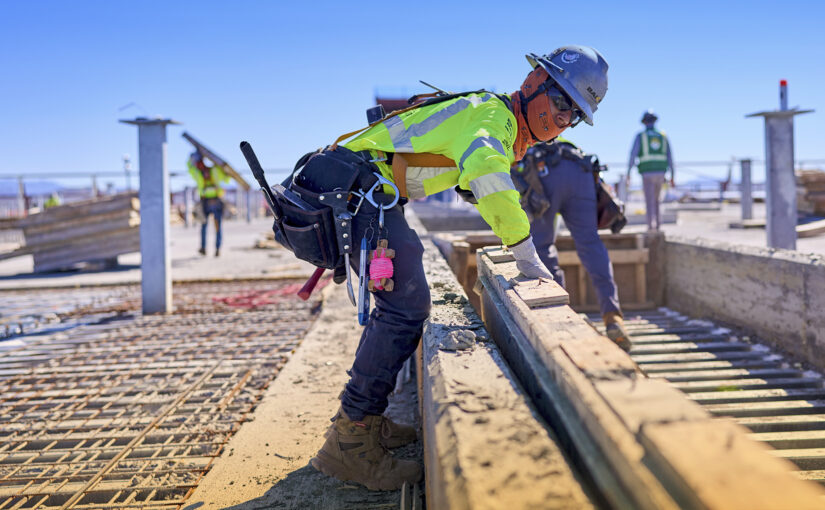
The economic and practical value of administrative controls increases when engineering options are constrained by variability, space, short project timelines, or high retrofit costs. In manufacturing, this occurs in legacy lines with tight footprints, highly customized manual assembly, or tasks with extreme product variability that defeats standardized fixturing. In construction, variability is endemic: changing terrain, transient workfaces, dynamic coordination among trades, and shifting material staging make it difficult to engineer-out every handling exposure. Construction ergonomics literature identifies WMSDs as a major non-fatal injury burden and reviews multiple assessment approaches, emphasizing that construction workers are exposed to high force demands, awkward postures, repetition, vibration, and contact stresses, while site constraints can impede upstream controls.
Because behavior and real-time decisions are central in these environments, training that improves decision-making under constraints, avoiding shortcuts, repositioning before lifting, staging loads, requesting help, and using available mechanical aids, can plausibly yield greater incremental benefit than stretching routines that do not alter exposure mechanics. The gap between “knowing” and “doing” remains the central implementation problem: manual handling training does not automatically translate into changed behavior, and this is why high-quality delivery (practice, feedback, coaching, and reinforcement) is decisive. Evidence from construction intervention research also suggests that programs integrating ergonomics with worksite practices can improve ergonomic behaviors and reduce reported pain and injury outcomes, while simultaneously highlighting implementation barriers such as production pressure and multi-employer site complexity, precisely the conditions where behavior-focused strategies become pivotal.
This pattern also explains why stretching is attractive but often underperforms: it requires minimal task integration and can be rolled out broadly without confronting the operational drivers of risk. Yet some publications argues that stretching is commonly selected as a low-effort alternative to redesign and is frequently disconnected from task constraints and functional movement requirements, yielding questionable preventive impact relative to the resources consumed.
When comparing stretching versus biomechanics-based lifting instruction, the critical distinction is whether the intervention changes the mechanical exposure pathway that drives tissue loading and fatigue. Static stretching can modify ROM and perceived readiness, but injury-prevention evidence is limited, and pre-activity stretching without warm-up may be mechanistically mismatched to industrial demands. Additionally, stretching is frequently implemented without the complementary components (strengthening, neuromotor control, postural awareness tied to tasks) that would be required for functional transfer.
Biomechanics instruction, in contrast, can directly reduce spinal moments and adverse loading patterns through (i) load proximity (shorter moment arm), (ii) reduced twisting velocity via step-turn behaviors, (iii) avoidance of extreme lumbar flexion under load, and (iv) improved coupling and planning that reduces impulsive lifts. These principles are consistent with biomechanical risk evidence emphasizing the importance of dynamic trunk motion and workplace factors in differentiating injury risk. The limitation is that training effects dissipate without reinforcement and without feasible alternatives (e.g., no space to stage, no time to reposition, no access to assists), which is why training must be embedded within a broader system of work design and organizational controls, even when engineering redesign is incomplete.
Thus, the most defensible interpretation is not that stretching is “always useless” or that lifting training is “always effective,” but that stretching is frequently over-credited for prevention and used as a symbolic control, while lifting biomechanics, properly conceptualized as decision-making under load and coached in context, has a clearer causal link to exposure reduction and therefore can be the more beneficial administrative component when upstream controls are constrained.
When elimination and engineering controls are not feasible or are delayed, an evidence-informed administrative strategy should prioritize behavior and biomechanics over static stretching. This includes training workers to recognize and avoid shortcuts, to plan lifts (test weight, path, destination), to keep loads close, to avoid twist by stepping, to use a hip-hinge or semi-squat pattern that avoids extreme lumbar flexion, and to choose staging or load splitting when constraints elevate risk. These recommendations align with the biomechanical literature’s caution against prescribing a universal squat technique while supporting guidance that minimizes extreme lumbar flexion and rotation under load. They also align with manual handling training reviews indicating that training must be designed for transfer—requiring practice, feedback, and reinforcement in realistic settings—rather than delivered as a one-off classroom event.
Stretching, if used at all, should be reframed away from cold static end-range holds and toward brief, low-fatigue dynamic warm-up and movement preparation (circulatory increase, joint mobility, activation), consistent with evidence that warm-up can change musculotendinous failure properties and that workplace warm-up intervention evidence remains limited and uncertain. This reframing reduces the risk of misinterpretation, importing “sports stretching” routines into industrial contexts without the physiological prerequisites—and decreases the probability that stretching becomes a substitute for real exposure control.
Stretching and safe lifting instruction are both administrative controls, and both are frequently mispositioned as primary prevention strategies in industrial ergonomics. The evidence base indicates that static stretching alone offers limited injury-prevention benefit and is often misapplied when performed on cold tissues at shift start without an appropriate warm-up, while also lacking the strengthening and neuromotor integration needed for functional transfer. By contrast, biomechanics-based instruction, when task-specific, coached, and reinforced, targets modifiable loading determinants and is particularly valuable in settings where engineering controls are difficult or costly and where worker decisions materially shape exposure, such as construction and highly variable manual work.
Therefore, stretching/warm-ups should not be treated as the “silver bullet” or the visible stand-in for an ergonomics program. Instead, organizations should prioritize upstream controls (elimination and engineering) and then, for residual risk or constrained environments, implement biomechanics education focused on good decisions and avoidance of shortcuts, supported by coaching, practice, and supervisory reinforcement, while using warm-up activities (if desired) as movement preparation rather than cold static stretching.
Ergo-ology partnered with Glazer’s Beer & Beverage to address the leading operational risk in beverage distribution: Manual Material Read more
Yamaha leaned into Ergo-ology’s ELP® (ergonomics leadership program) at the start of 2022 with hopes of engaging employees, developing a Read more

We are pleased to announce the United States of America has granted Ergo-ology permissions to certify in #ergonomics with the Read more