
Ergonomic Expert Witness | Expertise in Physiology & Forensics (click here)
Motor vehicle accident (MVA) litigation has evolved into a high‑stakes environment where claim severity, litigation complexity, and defense costs have escalated, particularly for cases involving commercial fleets and large organizations. In the past decade, broader “social inflation” forces (e.g., larger verdicts, increased litigation activity, and higher legal costs) have been identified as material drivers of rising liability claim costs in the United States. In parallel, commercial auto liability has experienced persistent performance challenges and increasing claim severity, including reports that average loss severity has more than doubled over a recent multi‑year period and that major losses continue to pressure insurers and insureds alike. Within this context, motor vehicle reconstruction and biomechanical analysis provide attorneys; representing either plaintiffs or defendants, with a rigorous, physics‑based framework to evaluate the central question in many injury disputes: Is the claimed injury consistent with the mechanical loading produced by this collision event?
Reconstruction as Reverse Engineering: Establishing What Happened
Motor vehicle reconstruction is a disciplined “reverse engineering” process that uses physical evidence to estimate the crash configuration and vehicle kinematics, how vehicles moved through impact and how crash energy was exchanged. Crash reconstruction commonly integrates scene measurements, vehicle damage profiles, event data where available, and validated computational approaches to estimate impact speeds and severity metrics. One of the most widely used severity metrics is delta‑V (change in velocity), which has long been used in crashworthiness and reconstruction contexts as an indicator of crash severity and as an input for understanding occupant loading and injury risk. Reconstruction outputs that frequently matter in litigation include: impact direction and overlap; pre‑impact speed estimates; delta‑V; crash pulse characteristics (acceleration‑time history); and post‑impact trajectories, each of which influences occupant motion and potential injury mechanisms.
Importantly, reconstruction is not simply “speed estimation.” The manner in which energy is transferred, over what duration, with what pulse shape, and at what impact angle, can be as influential as the magnitude of delta‑V itself for understanding occupant motion. Real‑world crash research has demonstrated that similar delta‑V events can present with meaningfully different pulse durations and shapes, and that mean acceleration (linked to pulse duration) can vary substantially even when delta‑V is similar. This is a critical concept in MVA cases involving soft tissue injuries, where “minor property damage” narratives may not fully capture the occupant’s biomechanical exposure if pulse dynamics and occupant coupling are ignored.
From Vehicle Kinematics to Occupant Loading: Why Biomechanics Matters
Reconstruction answers, “What happened to the vehicles?” Biomechanics extends the analysis to, “What happened to the occupant’s body?”, linking vehicle motion to occupant kinematics (motion) and then to kinetics (forces and moments). NHTSA’s biomechanics research enterprise underscores the broader goal: developing knowledge and tools to understand human response and injury tolerance under crash loading to mitigate injury and death. In litigation, that same scientific foundation is applied to evaluate whether the reported injury mechanism is mechanically plausible given the collision’s dynamics, occupant posture, restraint use, and contact events (e.g., headrest, steering wheel, side window).
This is not inherently pro‑plaintiff or pro‑defense. A biomechanics expert can strengthen a plaintiff case by quantifying substantial exposure consistent with injury mechanisms (for example, higher accelerations, shorter pulses, unfavorable angles, or significant occupant compartment intrusion). Conversely, the same methods can support the defense by demonstrating that claimed tissue loading is inconsistent with the crash configuration, or by identifying when key assumptions in the injury narrative are incompatible with physical evidence.
Inverse Dynamics and Musculoskeletal Modeling: Estimating Forces on Specific Soft Tissue
A central scientific tool in biomechanical injury analysis is inverse dynamics, which computes net joint reaction forces and moments from known motion (joint angles, velocities, accelerations) and external forces. OpenSim’s (kinematic software) documentation describes inverse dynamics as a method that uses kinematics and external forces to solve for net joint reaction forces and moments that satisfy dynamic equilibrium conditions. In the context of MVAs, inverse dynamics can be used to estimate net cervical moments, lumbar loading proxies, or extremity joint loads associated with occupant kinematics during the crash pulse and subsequent restraint/compartment interactions.
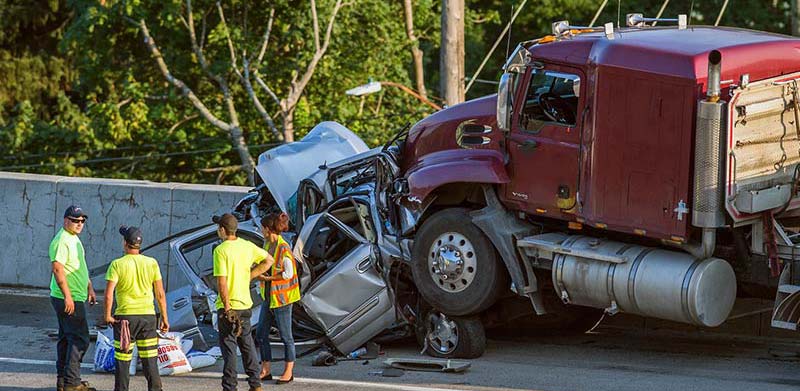
:focal(1060x707:1061x708)/https://tf-cmsv2-smithsonianmag-media.s3.amazonaws.com/filer_public/5b/ff/5bff4a4d-3094-4ef4-b70d-791bcd909099/gettyimages-104574303.jpg)
While inverse dynamics alone typically estimates net joint loads rather than individual muscle forces, it provides the mechanical “bridge” between observed or reconstructed kinematics and internal loading that can be compared to published tissue tolerance and injury mechanism literature. When augmented with musculoskeletal modeling workflows (e.g., scaled anthropometry, inverse kinematics, inverse dynamics), the analysis can provide a structured, repeatable basis for quantifying joint loads under specific posture assumptions. This is particularly relevant for litigation, because posture assumptions, headrest gap, seatback interaction, belt fit, bracing behavior, can materially change the computed loads and therefore the plausibility of soft tissue injury mechanisms.
Tissue Tolerance and Direction‑Specific Loading: Why “How” Matters as Much as “How Much”
Soft tissue injury risk is strongly dependent on loading direction, rate, and combined motion patterns (e.g., extension with shear, rotation with lateral flexion). Whiplash biomechanics literature describes characteristic rear‑impact occupant motion that produces cervical compression and shear early in the event, with subsequent tension, and highlights the cervical facet joints and capsular ligaments as plausible pain generators in many cases. This body of work also emphasizes that whiplash injury mechanisms are complex, often not accompanied by obvious tissue damage visible on standard imaging, and therefore require careful integration of mechanics, symptoms, and clinical findings.
Crash pulse characteristics further complicate simplistic severity arguments. Real‑world rear‑impact research shows that for a given delta‑V, pulse duration can vary widely, and mean acceleration can differ substantially, factors that may influence soft tissue injury risk and occupant response. For attorneys, this means that credible injury causation work should go beyond a single scalar severity label and instead evaluate the full chain: vehicle dynamics → occupant kinematics → joint loading → tissue tolerance comparison, while acknowledging uncertainty and biological variability.
What Injury Causation Means in a Scientific, Litigation‑Relevant Sense
Injury causation, in the forensic biomechanics’ context, is not merely a declaration that “an injury occurred.” It is a structured evaluation of whether a collision provides a mechanically plausible pathway for the claimed injury, considering event severity, occupant motion, contacts, restraint coupling, and known injury mechanisms. This evaluation is most defensible when it is framed as a likelihood assessment grounded in physical evidence rather than as absolute certainty, especially for soft tissue conditions where symptom reporting, pre‑existing degeneration, and psychosocial factors can influence outcomes.
A key strength of biomechanics‑based causation work is that it can clarify the relationship between crash physics and claimed injury by constraining assumptions to what the evidence supports. If a case requires assumptions about occupant position, head contact, or bracing behavior, those assumptions can be explicitly stated, sensitivity tested, and compared against available evidence (e.g., scene photos, vehicle interior marks, EDR data, or video).
This transparency allows the fact finder to see not just conclusions, but the physical basis and the uncertainty bound behind the causation opinion.
Why Collaboration with Orthopedic Physicians Strengthens Expert Reliability
Biomechanics experts and orthopedic physicians answer different parts of the same causation question. Physicians interpret diagnosis, clinical course, imaging, and functional outcomes, while biomechanics experts quantify exposure, occupant motion, and mechanical plausibility. When these domains are aligned, the case narrative becomes more scientifically coherent: the orthopedic opinion can be anchored to a physically plausible mechanism, and the biomechanical opinion can be interpreted in the context of real clinical findings and timelines. This multidisciplinary approach is particularly useful in soft tissue and spine cases where injury mechanisms are debated and where diagnostic certainty may be limited by imaging sensitivity.
Identifying Inconsistencies: Using Physics and Video to Test the Narrative
Biomechanical expert work is also valuable because it can identify inconsistencies between the injury narrative and objective evidence. For example, discovery statements about seating position, head contact location (window vs headrest vs steering wheel), or foot placement (brake vs accelerator) directly affect modeled occupant kinematics, boundary conditions, and computed joint loads, potentially changing conclusions about soft tissue loading and injury plausibility. Similarly, contemporaneous video (e.g., dash camera footage) can sometimes provide observable kinematics that are difficult to reconcile with later claims of marked weakness, severe range‑of‑motion restriction, or gross movement limitation at the same time point. While video is not a medical exam, it can serve as an objective behavioral datapoint to evaluate consistency and timeline.
In a broader claims environment characterized by rising severity and litigation costs, claims organizations have emphasized earlier and more rigorous evidence capture and investigation to improve outcomes, an approach consistent with the forensic value of reconstruction, video analysis, and physics‑based causation testing.
When the objective record and narrative conflict, biomechanics can help isolate which elements are physically plausible and which require assumptions unsupported by evidence.
The Ergonomics Perspective: Pre‑Existing Conditions, Work History, and Alternative Causes
A Certified Professional Ergonomist (CPE) or ergonomics‑trained biomechanist can provide additional causation clarity by examining occupational exposure history. Many musculoskeletal complaints are multifactorial and may involve pre‑existing degeneration, prior workplace injuries, long‑standing restrictions, or cumulative exposures from physically demanding work.
In MVA litigation, a structured review of job history, physical job demands, prior work restrictions, and documented prior injuries can help distinguish between (a) injuries primarily caused by the collision, (b) aggravations of pre‑existing conditions, and (c) symptoms more plausibly related to prior exposures than to the crash itself.
This perspective can be relevant for both sides. For plaintiffs, identifying a clear pre‑collision baseline and explaining how the collision changed function or symptoms can strengthen causation and damages arguments.
For defendants, well‑documented prior limitations or injury history may provide alternative explanations for symptom presentation and may affect the plausibility of attributing the entirety of impairment to the collision alone.
The objective is not to dismiss injuries, but to ensure that attribution is aligned with evidence and consistent with the physical and clinical record.
Why Expert Work Has Grown in Value Over the Past Decade
The increasing value of biomechanics and reconstruction support is inseparable from the broader trend toward higher liability claim costs and litigation complexity. Swiss Re reports that social inflation increased U.S. liability claims by 57% over the past decade, highlighting litigation costs and large verdicts as key drivers. In commercial auto, industry reporting notes that average loss severity has more than doubled over recent years and that claim duration and litigation exposure elevate direct costs such as attorney fees and expert witness expenses. Large‑loss analyses in the auto liability space have also emphasized the persistence of high‑severity outcomes and the need for robust evidence and defensible analyses, particularly as cases can take years to resolve.
At the claim handling level, Sedgwick’s reporting reflects rising incurred costs and emphasizes that litigated claims can carry disproportionately large financial impact relative to their frequency, reinforcing why early evidence development and expert analysis can materially change case strategy and outcomes.
In this environment, a biomechanics expert witness offers attorneys a methodologically grounded way to quantify exposure, test narratives, and present causation opinions that are anchored in physics and consistent with medical science.
What Attorneys Typically Receive: Litigation‑Ready Scientific Deliverables
Comprehensive reconstruction and biomechanics engagement commonly results in litigation‑ready outputs designed to support deposition, mediation, or trial. These may include a reconstruction report with delta‑V and crash pulse characterization; an occupant kinematics narrative tied to restraint/compartment interactions; inverse dynamics‑based estimates of net joint loads under defined posture assumptions; and an evidence‑based discussion comparing estimated loading pathways to known injury mechanisms and tolerance concepts from the scientific literature. Where appropriate, the work may also include inconsistency analyses that reconcile discovery statements, video evidence, and the objective physical record, helping the attorney identify which factual disputes meaningfully alter the mechanics and which do not.
These deliverables are most persuasive when they clearly separate observed facts from modeled assumptions and when they communicate findings in a way that can be understood by non‑engineers without sacrificing scientific rigor.
Conclusion: Defensible Causation Requires Evidence‑Bound Physics
In MVA cases, the dispute often centers on more than whether an accident occurred, it centers on whether the accident produced the mechanical conditions necessary to plausibly cause the claimed injury. Reconstruction provides the evidence‑based physics of the event (delta‑V, pulse, angle, overlap), while biomechanics translates those conditions into occupant motion, joint loading, and tissue‑relevant exposure metrics using established analytical approaches such as inverse dynamics. When integrated with orthopedic expertise and informed by tissue injury mechanism science, this approach allows both plaintiff and defense teams to address causation with greater clarity, transparency, and truthfulness, reducing reliance on speculation and anchoring opinions in what the evidence and physics can support

Ergo-ology partnered with Glazer’s Beer & Beverage to address the leading operational risk in beverage distribution: Manual Material Read more

Yamaha leaned into Ergo-ology’s ELP® (ergonomics leadership program) at the start of 2022 with hopes of engaging employees, developing a Read more

We are pleased to announce the United States of America has granted Ergo-ology permissions to certify in #ergonomics with the Read more