
What It Means—and How Ergo‑ology Helps You Go Beyond Compliance
Effective June 1, 2025, New York State enacted an ergonomics provision—formally the Warehouse Worker Injury Reduction Program (WWIRP)—under Labor Law § 789 within Article 21‑A (Warehouse Worker Protection Act). The law requires covered warehouse employers to establish a comprehensive injury reduction program that identifies and minimizes the risk of work‑related musculoskeletal disorders (MSDs) for employees performing manual material handling tasks.
What the law requires (in plain English)
If your New York warehouse operations meet the coverage thresholds (≥ 100 employees at a single distribution center or ≥ 1,000 employees across multiple NY facilities), you must build and maintain an MSD injury reduction program that includes:
Key date: The initial worksite ergonomic exposure risk assessment was required by June 19, 2025; if yours is not complete, you may already be out of compliance.

Ergo‑ology’s three‑part approach is built to meet the letter of § 789 and improve safety, productivity, and culture across your operation.
1) Manual Material Handling Training (“Bootcamps”)
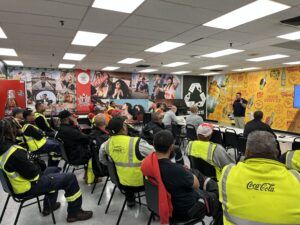
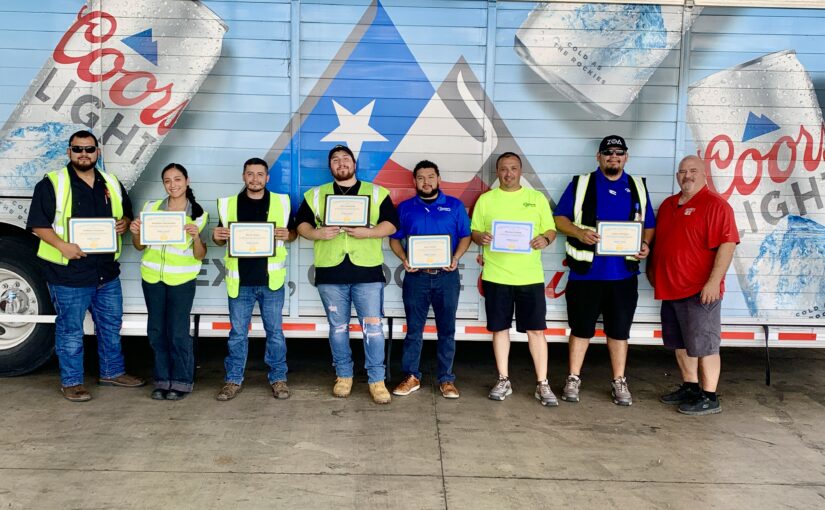
Our hands‑on, train‑the‑trainer Bootcamp teaches proper biomechanics and emphasizes process discipline under real work conditions. Employees learn, do, and see through customized obstacle courses and 1:1 video analysis—turning abstract “lift with your legs” advice into visible, coachable movement habits. Graduates earn certification to sustain training internally.
How it maps to § 789: The law requires annual injury reduction training for employees and supervisors; our Bootcamp satisfies this requirement while fostering measurable behavior change that reduces MSD risk in high‑frequency lifting.
2) Workplace Ergonomic Assessments (Industry)
Ergo‑ology’s Workplace Risk Analysis pinpoints operational “hot spots”—from pick heights and reach distances to equipment accommodations and employee behaviors that elevate risk. Each report provides a roadmap of recommendations with priority scoring, engineering concepts, and ROI support—so leaders can act on the most impactful changes first.
How it maps to § 789: We deliver the written worksite evaluation your program requires, incorporate employee input on tasks, and give you the documentation trail and correction schedules regulators expect.
3) Biometric Feedback on Work Intensity (Patented, non‑invasive)
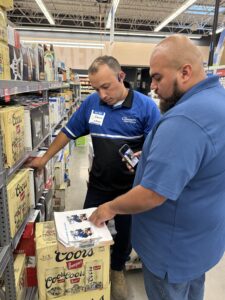
Warehouses—especially order builders—face pace and volume demands that can silently push workers beyond safe aerobic limits. Our patented, non‑invasive technology integrates biometric signals (e.g., heart rate) to estimate metabolic rate and total body work intensity relative to your lifting demands (weights, frequency, vertical placement). We then benchmark the expected workload against NIOSH’s guidance for sustained energy expenditure over an 8‑hour period—~33% of a worker’s VO₂max—to confirm whether the job’s design stays within safe physiological tolerance.
Background: NIOSH’s Work Practices Guide for Manual Lifting and the Revised NIOSH Lifting Equation establish the physiological, biomechanical, and psychophysical foundations for acceptable lifting over extended durations. While many practitioners use ~33% of VO₂max as the long‑duration (8‑hour) design target for sustained work, the NIOSH corpus provides the underpinning for relating energy expenditure and oxygen consumption to safe workload limits.
Why biometrics? For industrial tasks, heart rate correlates linearly with oxygen consumption and energy expenditure, making non‑invasive HR monitoring a practical index for evaluating full‑shift work tolerance without interrupting tasks.
How it maps to § 789: The statute explicitly flags pace as an ergonomic risk factor; our work‑intensity quantification gives you a way to measure pace physiologically, set production expectations within safe limits, and document exposure controls for auditors.
Quick start: A 3‑step compliance checklist
Results you can reference
Ergo‑ology’s approach is trusted by leading brands. Coca‑Cola distribution leaders have publicly endorsed our Bootcamps and workshops for their impact and engagement.
In the last six months, many Fortune 500 companies have taken advantage of this NY Ergo Protection package—including #Coca‑Cola, #ADUSA, #Hannaford Grocery, #Food Lion, #Chewy, and more—leveraging training, assessments, and work‑intensity verification to elevate safety while staying audit‑ready.
Ergo-ology partnered with Glazer’s Beer & Beverage to address the leading operational risk in beverage distribution: Manual Material Read more
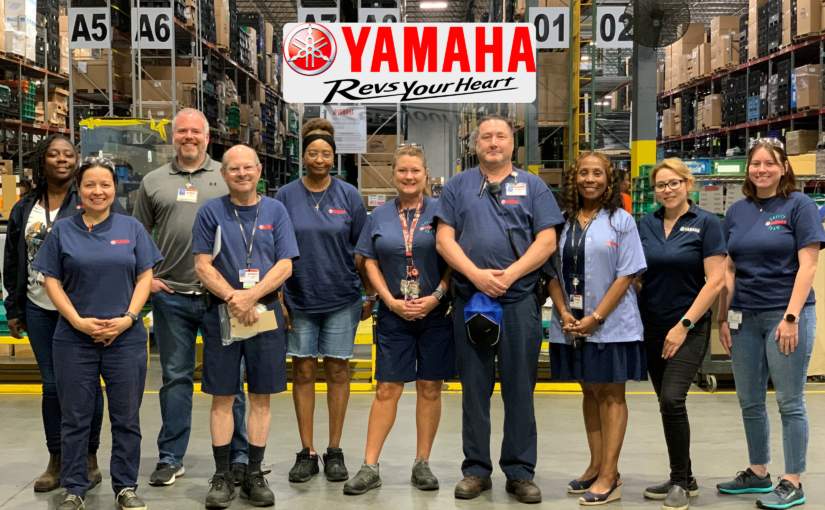
Yamaha leaned into Ergo-ology’s ELP® (ergonomics leadership program) at the start of 2022 with hopes of engaging employees, developing a Read more
We are pleased to announce the United States of America has granted Ergo-ology permissions to certify in #ergonomics with the Read more